The Prophet ﷺ ended every day by remembering Allah. Before sleeping he had a short dua, recited particular surahs and verses, and lay down in a particular way. You do not need to do all of it every night: start with the first dua below and add the others over time.
The dua before sleeping
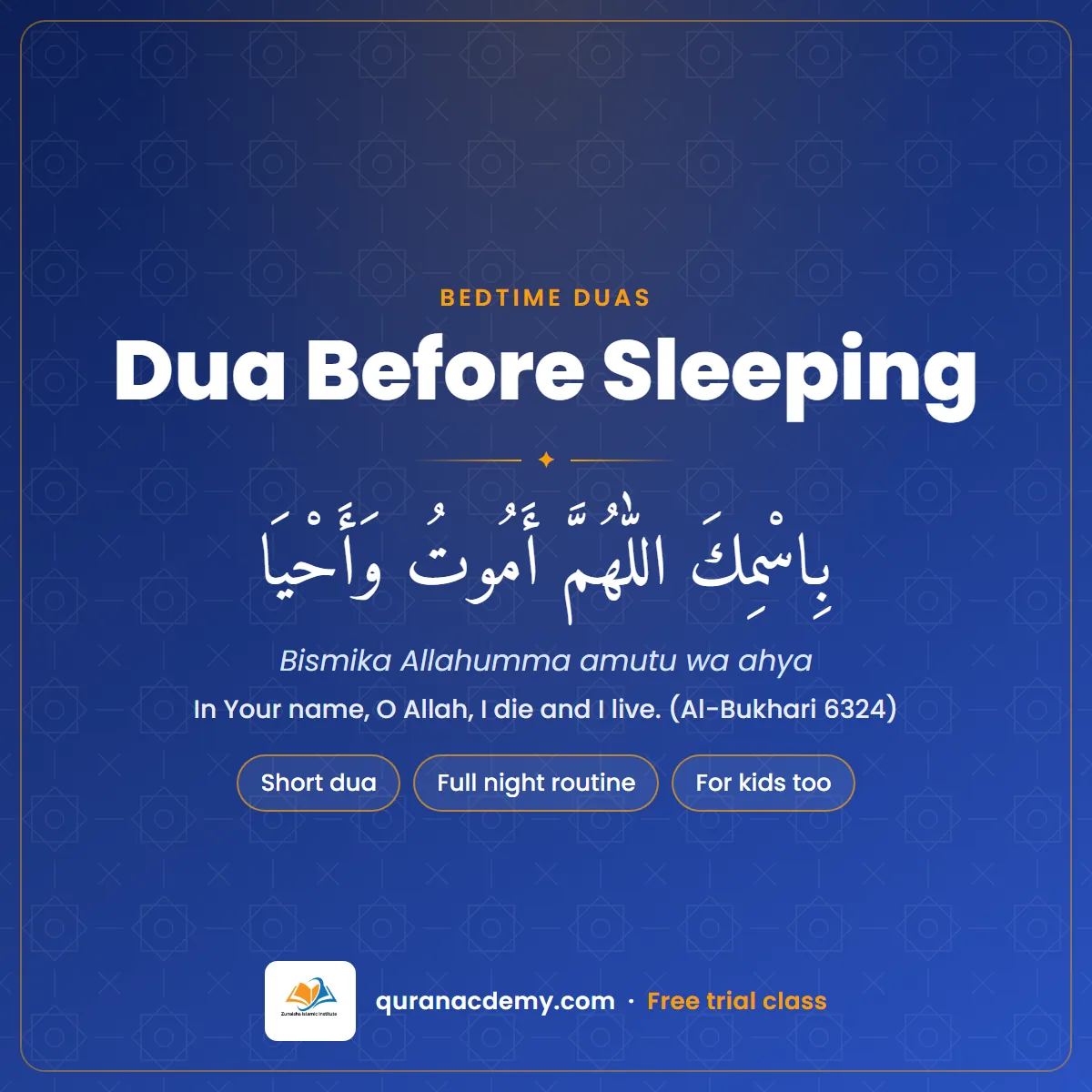
Bismika Allahumma amutu wa ahya
بِاسْمِكَ اللّٰهُمَّ أَمُوتُ وَأَحْيَا
TransliterationBismika Allahumma amutu wa ahya
MeaningIn Your name, O Allah, I die and I live.
The shortest and best-known bedtime dua, and the first one to teach children.
Sahih al-Bukhari 6324
Allahumma qini 'adhabak
اللّٰهُمَّ قِنِي عَذَابَكَ يَوْمَ تَبْعَثُ عِبَادَكَ
TransliterationAllahumma qini 'adhabaka yawma tab'athu 'ibadak
MeaningO Allah, protect me from Your punishment on the Day You resurrect Your servants.
The Prophet ﷺ would place his right hand under his cheek and say this three times.
Sunan Abi Dawud 5045; Jami' at-Tirmidhi 3398
Allahumma aslamtu nafsi ilayk
اللّٰهُمَّ أَسْلَمْتُ نَفْسِي إِلَيْكَ وَفَوَّضْتُ أَمْرِي إِلَيْكَ وَوَجَّهْتُ وَجْهِي إِلَيْكَ وَأَلْجَأْتُ ظَهْرِي إِلَيْكَ رَغْبَةً وَرَهْبَةً إِلَيْكَ لَا مَلْجَأَ وَلَا مَنْجَا مِنْكَ إِلَّا إِلَيْكَ آمَنْتُ بِكِتَابِكَ الَّذِي أَنْزَلْتَ وَبِنَبِيِّكَ الَّذِي أَرْسَلْتَ
TransliterationAllahumma aslamtu nafsi ilayk, wa fawwadtu amri ilayk, wa wajjahtu wajhi ilayk, wa alja'tu zahri ilayk, raghbatan wa rahbatan ilayk, la malja'a wa la manja minka illa ilayk. Amantu bi-kitabikal-ladhi anzalt, wa bi-nabiyyikal-ladhi arsalt.
MeaningO Allah, I submit myself to You, entrust my affairs to You, turn my face to You and rely on You, out of hope in You and fear of You. There is no refuge and no escape from You except to You. I believe in Your Book which You revealed and in Your Prophet whom You sent.
The Prophet ﷺ said that whoever says this, makes it their last words and dies that night, dies upon the fitrah (natural faith).
Sahih al-Bukhari 247
What to recite before sleeping
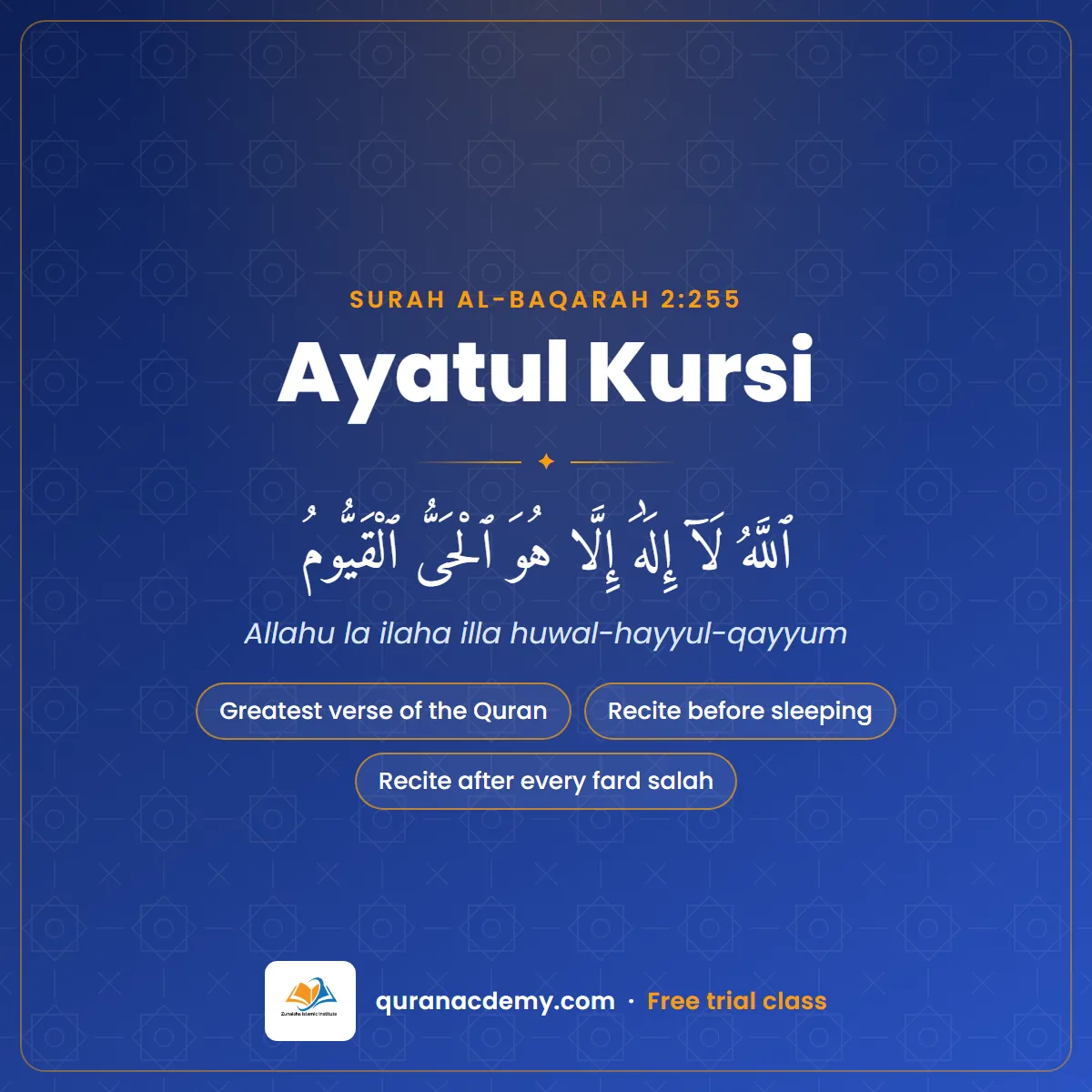
- Ayatul Kursi. Whoever recites it at bedtime has a guardian from Allah through the night, and Shaytan does not come near them until morning (Sahih al-Bukhari 2311). Read Ayatul Kursi with meaning.
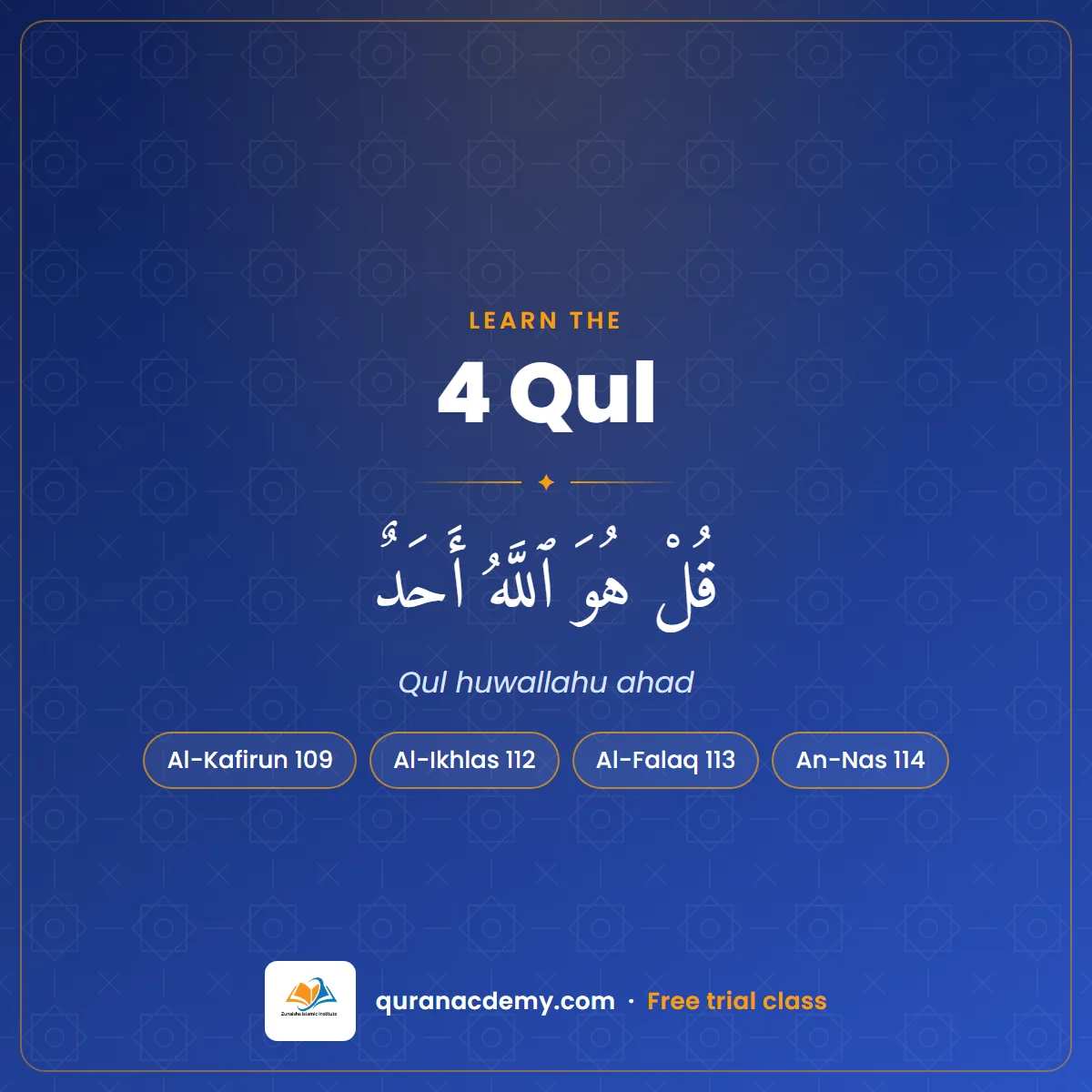
- The three Quls. The Prophet ﷺ would cup his hands, blow into them, recite Al-Ikhlas, Al-Falaq and An-Nas, and wipe over his body, three times (Sahih al-Bukhari 5017). Read the Quls with meaning.
- The last two verses of Surah Al-Baqarah, below. Whoever recites them at night, they will be sufficient for him (Sahih al-Bukhari 5009).
- Tasbih of Fatimah, below, which the Prophet ﷺ taught his daughter and 'Ali to say when going to bed (Sahih al-Bukhari 3705).
Last two verses of Surah Al-Baqarah
ءَامَنَ ٱلرَّسُولُ بِمَآ أُنزِلَ إِلَيْهِ مِن رَّبِّهِۦ وَٱلْمُؤْمِنُونَ ۚ كُلٌّ ءَامَنَ بِٱللَّهِ وَمَلَٰٓئِكَتِهِۦ وَكُتُبِهِۦ وَرُسُلِهِۦ لَا نُفَرِّقُ بَيْنَ أَحَدٍ مِّن رُّسُلِهِۦ ۚ وَقَالُوا۟ سَمِعْنَا وَأَطَعْنَا ۖ غُفْرَانَكَ رَبَّنَا وَإِلَيْكَ ٱلْمَصِيرُ ﴿٢٨٥﴾ لَا يُكَلِّفُ ٱللَّهُ نَفْسًا إِلَّا وُسْعَهَا ۚ لَهَا مَا كَسَبَتْ وَعَلَيْهَا مَا ٱكْتَسَبَتْ ۗ رَبَّنَا لَا تُؤَاخِذْنَآ إِن نَّسِينَآ أَوْ أَخْطَأْنَا ۚ رَبَّنَا وَلَا تَحْمِلْ عَلَيْنَآ إِصْرًا كَمَا حَمَلْتَهُۥ عَلَى ٱلَّذِينَ مِن قَبْلِنَا ۚ رَبَّنَا وَلَا تُحَمِّلْنَا مَا لَا طَاقَةَ لَنَا بِهِۦ ۖ وَٱعْفُ عَنَّا وَٱغْفِرْ لَنَا وَٱرْحَمْنَآ ۚ أَنتَ مَوْلَىٰنَا فَٱنصُرْنَا عَلَى ٱلْقَوْمِ ٱلْكَٰفِرِينَ ﴿٢٨٦﴾
TransliterationAmanar-rasulu bima unzila ilayhi mir-rabbihi wal-mu'minun. Kullun amana billahi wa mala'ikatihi wa kutubihi wa rusulih. La nufarriqu bayna ahadim-mir-rusulih. Wa qalu sami'na wa ata'na, ghufranaka rabbana wa ilaykal-masir. La yukallifullahu nafsan illa wus'aha. Laha ma kasabat wa 'alayha mak-tasabat. Rabbana la tu'akhidhna in nasina aw akhta'na. Rabbana wa la tahmil 'alayna isran kama hamaltahu 'alal-ladhina min qablina. Rabbana wa la tuhammilna ma la taqata lana bih. Wa'fu 'anna, waghfir lana, warhamna. Anta mawlana fansurna 'alal-qawmil-kafirin.
MeaningThe Messenger believes in what has been sent down to him from his Lord, and so do the believers. Each of them believes in Allah, His angels, His Books and His Messengers: "We make no distinction between any of His Messengers." And they say, "We hear and we obey. Grant us Your forgiveness, our Lord; to You is the final return." Allah does not burden any soul beyond what it can bear. It will have the good it has earned, and bear the evil it has committed. "Our Lord, do not hold us responsible if we forget or make a mistake. Our Lord, do not place on us a burden like the one You placed on those before us. Our Lord, do not burden us with more than we can bear. Pardon us, forgive us and have mercy on us. You are our Protector, so help us against the disbelieving people."
Surah Al-Baqarah 2:285-286
Tasbih of Fatimah
سُبْحَانَ اللّٰهِ ×٣٣
الْحَمْدُ لِلّٰهِ ×٣٣
اللّٰهُ أَكْبَرُ ×٣٤
TransliterationSubhanAllah (33 times), Alhamdulillah (33 times), Allahu Akbar (34 times)
MeaningGlory be to Allah. All praise is for Allah. Allah is the Greatest.
The Prophet ﷺ told Fatimah and 'Ali this was better for them than a servant.
Sahih al-Bukhari 3705
The Prophet's bedtime routine
- Make wudu before going to bed (Sahih al-Bukhari 247).
- Dust off the bed three times with the edge of your clothing before lying down (Sahih al-Bukhari 6320).
- Lie on your right side, with your right hand under your cheek.
- Recite Ayatul Kursi, the three Quls and the last two verses of Al-Baqarah.
- Say the Tasbih of Fatimah and the bedtime duas above, ending with "Bismika Allahumma amutu wa ahya".
When you wake up
Dua after waking up
الْحَمْدُ لِلّٰهِ الَّذِي أَحْيَانَا بَعْدَ مَا أَمَاتَنَا وَإِلَيْهِ النُّشُورُ
TransliterationAlhamdu lillahil-ladhi ahyana ba'da ma amatana wa ilayhin-nushur
MeaningAll praise is for Allah, who gave us life after causing us to die, and to Him is the return.
Sahih al-Bukhari 6324
After a bad dream, the Prophet ﷺ taught us to spit lightly to the left three times, seek refuge in Allah from Shaytan three times, turn over onto the other side, and not tell anyone about the dream (Sahih Muslim 2262). A good dream is from Allah, and you may share it with people you love.
A bedtime routine for children
Bedtime is the easiest time of day to teach children duas, because it happens every night and they are calm. Start with "Bismika Allahumma amutu wa ahya" and the three Quls, blowing into their hands and wiping over them together. Add Ayatul Kursi when they are ready. For more duas children use every day, see 12 daily duas for kids, or let a teacher guide them in our Islamic Studies for kids course.
Frequently asked questions
What is the dua before sleeping?
"Bismika Allahumma amutu wa ahya" (In Your name, O Allah, I die and I live), from Sahih al-Bukhari 6324. It is the shortest and best-known bedtime dua.
What should I recite before sleeping?
Ayatul Kursi (Sahih al-Bukhari 2311), the three Quls blown into the hands and wiped over the body (Sahih al-Bukhari 5017), the last two verses of Surah Al-Baqarah (Sahih al-Bukhari 5009), and SubhanAllah 33, Alhamdulillah 33 and Allahu Akbar 34 times (Sahih al-Bukhari 3705).
Which side should a Muslim sleep on?
The Sunnah is to lie on the right side, with the right hand under the cheek, as the Prophet ﷺ did.
What should I do after a bad dream?
Spit lightly to your left three times, seek refuge in Allah from Shaytan three times, turn onto your other side, and do not tell anyone about it (Sahih Muslim 2262).
Should I make wudu before sleeping?
It is Sunnah. The Prophet ﷺ told al-Bara' ibn 'Azib to make wudu as for prayer before going to bed (Sahih al-Bukhari 247).
Last updated 29 October 2026. Spotted a mistake? Let us know.