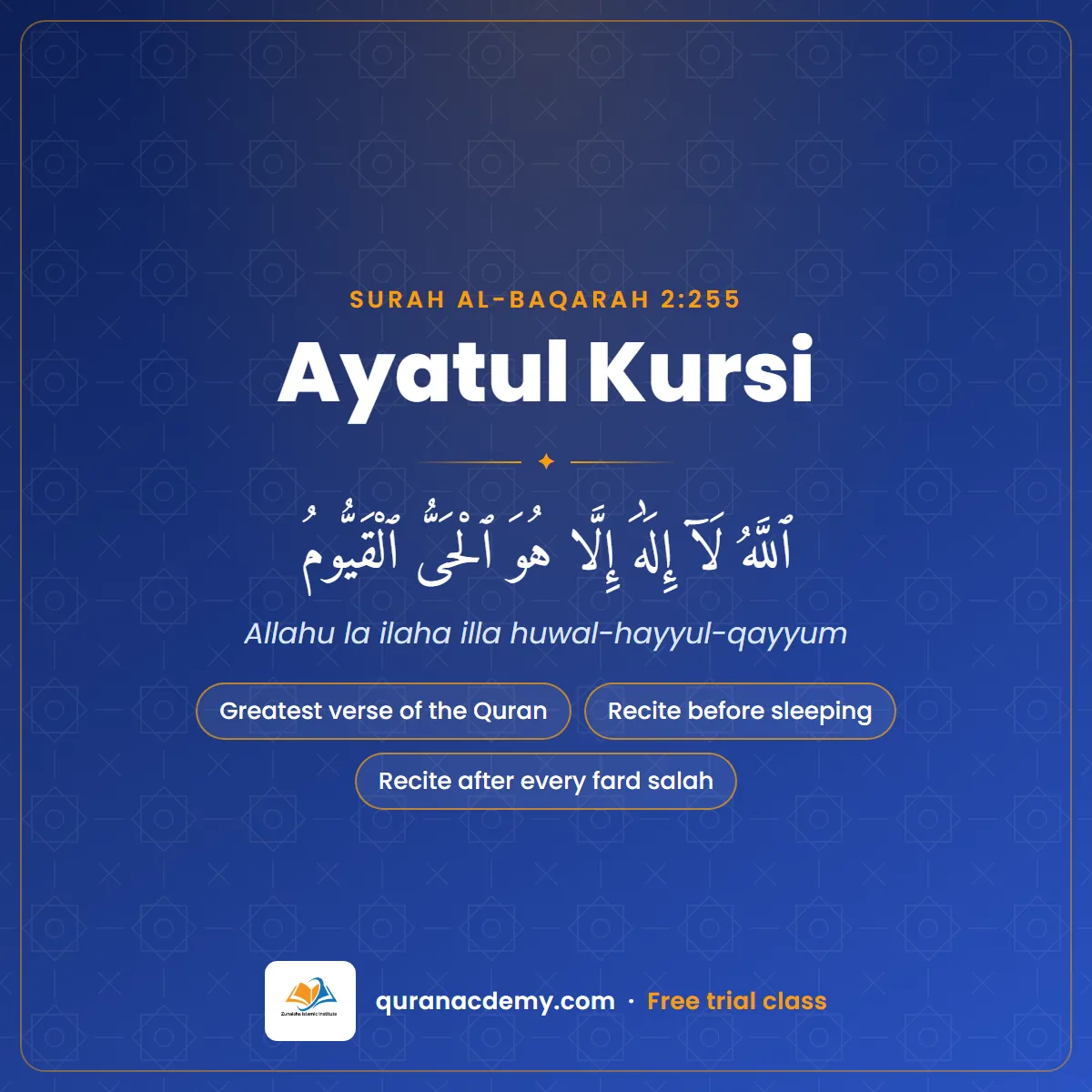
Ayatul Kursi, the Verse of the Throne, is verse 255 of Surah Al-Baqarah. The Prophet ﷺ called it the greatest verse in the Book of Allah. In a few lines it describes who Allah is: the Ever-Living, who never sleeps, who owns everything in the heavens and the earth, and whose knowledge has no limit.
Ayatul Kursi
ٱللَّهُ لَآ إِلَٰهَ إِلَّا هُوَ ٱلْحَىُّ ٱلْقَيُّومُ ۚ لَا تَأْخُذُهُۥ سِنَةٌ وَلَا نَوْمٌ ۚ لَّهُۥ مَا فِى ٱلسَّمَٰوَٰتِ وَمَا فِى ٱلْأَرْضِ ۗ مَن ذَا ٱلَّذِى يَشْفَعُ عِندَهُۥٓ إِلَّا بِإِذْنِهِۦ ۚ يَعْلَمُ مَا بَيْنَ أَيْدِيهِمْ وَمَا خَلْفَهُمْ ۖ وَلَا يُحِيطُونَ بِشَىْءٍ مِّنْ عِلْمِهِۦٓ إِلَّا بِمَا شَآءَ ۚ وَسِعَ كُرْسِيُّهُ ٱلسَّمَٰوَٰتِ وَٱلْأَرْضَ ۖ وَلَا يَـُٔودُهُۥ حِفْظُهُمَا ۚ وَهُوَ ٱلْعَلِىُّ ٱلْعَظِيمُ
TransliterationAllahu la ilaha illa huwal-hayyul-qayyum. La ta'khudhuhu sinatun wa la nawm. Lahu ma fis-samawati wa ma fil-ard. Man dhal-ladhi yashfa'u 'indahu illa bi-idhnih. Ya'lamu ma bayna aydihim wa ma khalfahum. Wa la yuhituna bi-shay'im-min 'ilmihi illa bima sha'. Wasi'a kursiyyuhus-samawati wal-ard. Wa la ya'uduhu hifzuhuma. Wa huwal-'aliyyul-'azim.
MeaningAllah: there is no god except Him, the Ever-Living, who sustains all that exists. Neither drowsiness nor sleep overtakes Him. To Him belongs everything in the heavens and everything on the earth. Who could intercede with Him except by His permission? He knows what is before them and what is behind them, and they grasp nothing of His knowledge except what He wills. His Kursi extends over the heavens and the earth, and guarding them does not tire Him. He is the Most High, the Most Great.
Surah Al-Baqarah 2:255
Virtues of Ayatul Kursi from authentic hadith
- The greatest verse of the Quran. The Prophet ﷺ asked Ubayy ibn Ka‘b which verse of the Book of Allah was greatest. He answered Ayatul Kursi, and the Prophet ﷺ praised his knowledge. (Sahih Muslim 810)
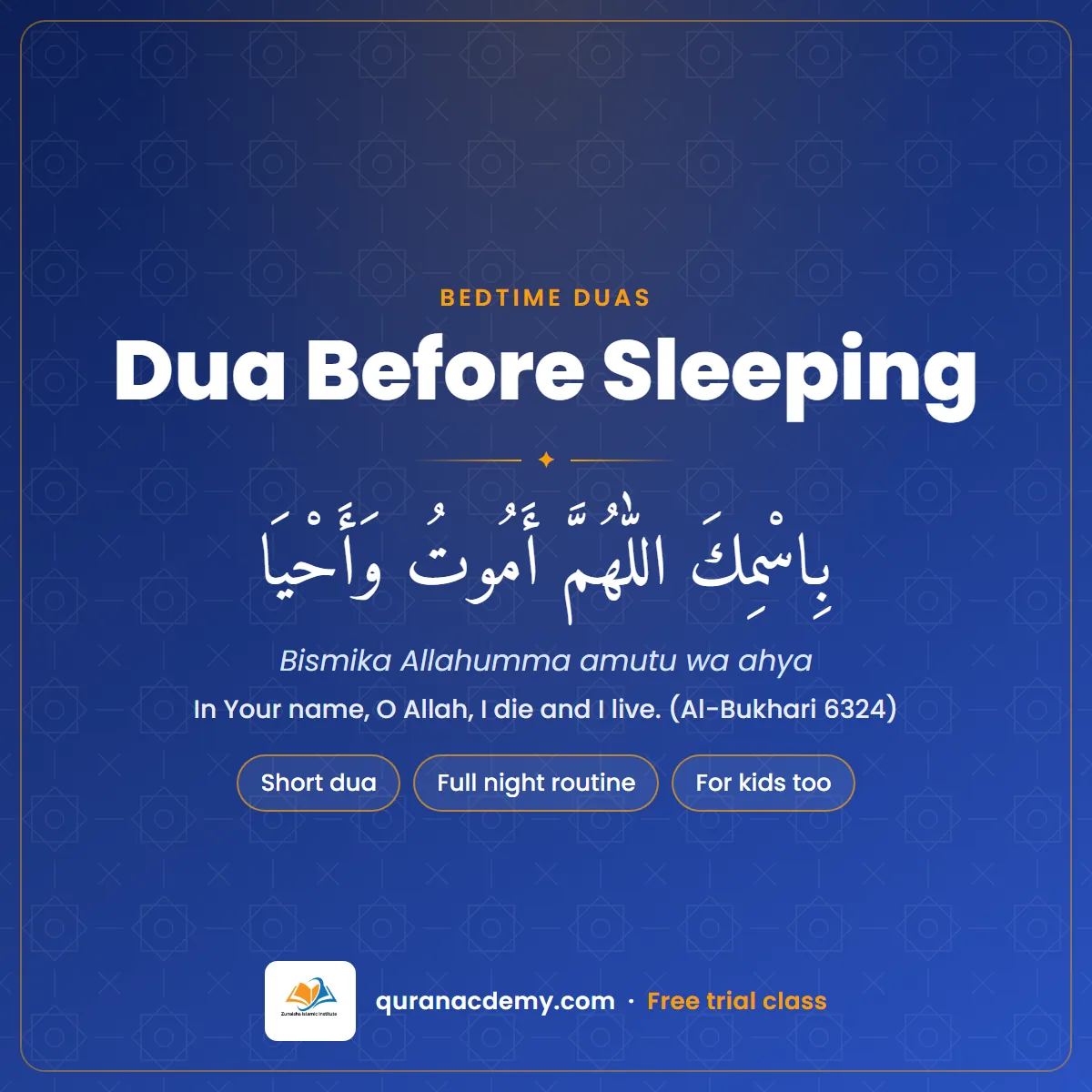
- Protection through the night. Whoever recites it when going to bed has a guardian from Allah with them, and Shaytan will not come near them until morning. (Sahih al-Bukhari 2311)
- After every obligatory prayer. The Prophet ﷺ said that whoever recites it after each obligatory prayer, nothing stands between them and entering Paradise except death. (An-Nasa’i, as-Sunan al-Kubra 9928)
When to recite Ayatul Kursi
- Before going to sleep
- After each of the five daily prayers
- As part of the morning and evening remembrance (adhkar)
- Whenever you want Allah's protection, for example before travelling
Tips for memorizing it
Break the verse into its nine short phrases, shown by the stop signs in the Arabic above. Learn one or two phrases a day, joining each new one to the ones before it. Most children can memorize the whole verse in one to two weeks. Reciting it to a teacher matters here: words such as al-qayyum, ya’uduhu and al-‘azim contain sounds that transliteration cannot show. Our Tajweed course and Hifz programme both start with verses like this one.
Frequently asked questions
Where is Ayatul Kursi in the Quran?
It is verse 255 of Surah Al-Baqarah, the second surah of the Quran, in the third juz.
Why is it called Ayatul Kursi?
Kursi means footstool or throne. The verse is named after the phrase "His Kursi extends over the heavens and the earth".
What is the reward for reciting Ayatul Kursi?
Authentic hadith say it is the greatest verse of the Quran (Sahih Muslim 810), that reciting it at bedtime brings Allah's protection through the night (Sahih al-Bukhari 2311), and that reciting it after every obligatory prayer is a means of entering Paradise (An-Nasa'i).
Can I read Ayatul Kursi without wudu?
Most scholars say you may recite Quran from memory without wudu. Touching a printed Mushaf without wudu is a separate question on which scholars differ, so ask a scholar you trust.
How long does it take to memorize Ayatul Kursi?
Most children learn it in one to two weeks with a few minutes of daily practice. Adults often learn it in a few days.
Last updated 29 October 2026. Spotted a mistake? Let us know.