The Prophet ﷺ had a short dua for almost every part of the day. Teaching these to children turns ordinary moments, like eating or leaving the house, into a way of remembering Allah. Start with one or two, and add a new one when the first ones become a habit.
Eating and drinking
Before eating
بِسْمِ اللّٰهِ
TransliterationBismillah
MeaningIn the name of Allah.
Sunan Abi Dawud 3767; Jami' at-Tirmidhi 1858
If you forgot to say Bismillah at the start
بِسْمِ اللّٰهِ أَوَّلَهُ وَآخِرَهُ
TransliterationBismillahi awwalahu wa akhirahu
MeaningIn the name of Allah, at its beginning and at its end.
Sunan Abi Dawud 3767; Jami' at-Tirmidhi 1858
After eating
الْحَمْدُ لِلّٰهِ الَّذِي أَطْعَمَنِي هٰذَا وَرَزَقَنِيهِ مِنْ غَيْرِ حَوْلٍ مِنِّي وَلَا قُوَّةٍ
TransliterationAlhamdu lillahil-ladhi at'amani hadha wa razaqanihi min ghayri hawlin minni wa la quwwah
MeaningAll praise is for Allah, who fed me this and provided it for me without any power or strength of my own.
For very young children, "Alhamdulillah" on its own is a good start.
Sunan Abi Dawud 4023; Jami' at-Tirmidhi 3458
Sleeping and waking up
Before sleeping
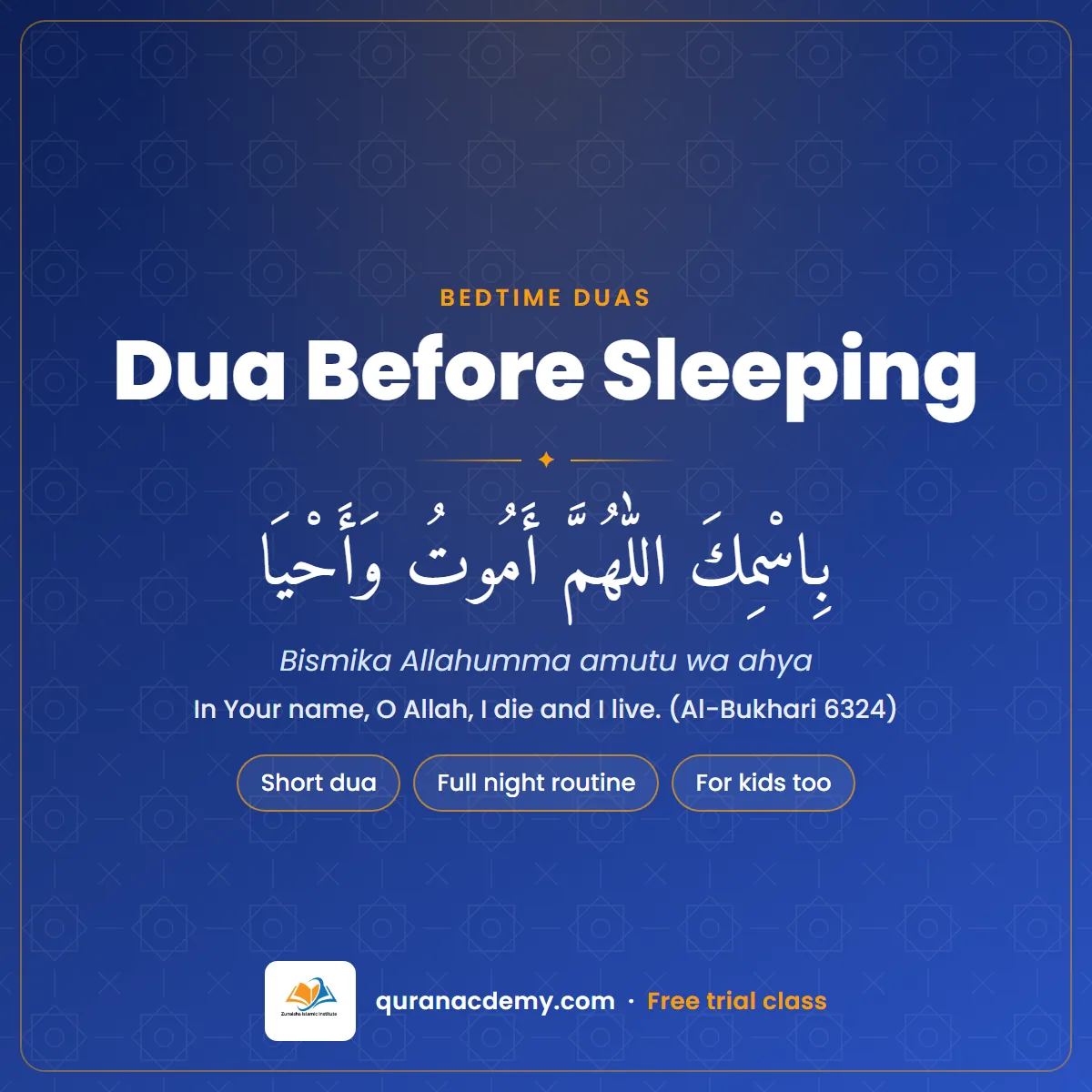
بِاسْمِكَ اللّٰهُمَّ أَمُوتُ وَأَحْيَا
TransliterationBismika Allahumma amutu wa ahya
MeaningIn Your name, O Allah, I die and I live.
Sleep is described as a small death, and waking as being brought back to life.
Sahih al-Bukhari 6324
After waking up
الْحَمْدُ لِلّٰهِ الَّذِي أَحْيَانَا بَعْدَ مَا أَمَاتَنَا وَإِلَيْهِ النُّشُورُ
TransliterationAlhamdu lillahil-ladhi ahyana ba'da ma amatana wa ilayhin-nushur
MeaningAll praise is for Allah, who gave us life after causing us to die, and to Him is the return.
Sahih al-Bukhari 6324
Home and the bathroom
Leaving home
بِسْمِ اللّٰهِ تَوَكَّلْتُ عَلَى اللّٰهِ وَلَا حَوْلَ وَلَا قُوَّةَ إِلَّا بِاللّٰهِ
TransliterationBismillahi, tawakkaltu 'alallah, wa la hawla wa la quwwata illa billah
MeaningIn the name of Allah. I put my trust in Allah. There is no power and no strength except with Allah.
Sunan Abi Dawud 5095; Jami' at-Tirmidhi 3426
Entering home
السَّلَامُ عَلَيْكُمْ
TransliterationAssalamu 'alaykum
MeaningPeace be upon you.
Say Bismillah as you step in, then greet everyone at home.
Surah An-Nur 24:61, which tells us to greet one another with salam when entering homes
Before entering the bathroom
اللّٰهُمَّ إِنِّي أَعُوذُ بِكَ مِنَ الْخُبُثِ وَالْخَبَائِثِ
TransliterationAllahumma inni a'udhu bika minal-khubuthi wal-khaba'ith
MeaningO Allah, I seek refuge in You from evil and from evil beings.
Said before going in, not inside the bathroom. Enter with the left foot.
Sahih al-Bukhari 142; Sahih Muslim 375
After leaving the bathroom
غُفْرَانَكَ
TransliterationGhufranak
MeaningI ask You for Your forgiveness.
Leave with the right foot.
Sunan Abi Dawud 30; Jami' at-Tirmidhi 7
Sneezing and the masjid
When you sneeze, and when someone else does
الْحَمْدُ لِلّٰهِ
يَرْحَمُكَ اللّٰهُ
يَهْدِيكُمُ اللّٰهُ وَيُصْلِحُ بَالَكُمْ
TransliterationThe one who sneezes says: Alhamdulillah. The listener replies: Yarhamukallah. The one who sneezed answers: Yahdikumullahu wa yuslihu balakum.
MeaningAll praise is for Allah. / May Allah have mercy on you. / May Allah guide you and set your affairs right.
Sahih al-Bukhari 6224
Entering and leaving the masjid
اللّٰهُمَّ افْتَحْ لِي أَبْوَابَ رَحْمَتِكَ
اللّٰهُمَّ إِنِّي أَسْأَلُكَ مِنْ فَضْلِكَ
TransliterationEntering: Allahummaf-tah li abwaba rahmatik. Leaving: Allahumma inni as'aluka min fadlik.
MeaningEntering: O Allah, open the doors of Your mercy for me. Leaving: O Allah, I ask You for Your bounty.
Enter with the right foot and leave with the left.
Sahih Muslim 713
How to teach daily duas to children
- Say it out loud yourself, every time. Children learn duas by hearing them at the moment they are used, long before they sit down to memorize them.
- One new dua a week. Pick one tied to something your child does every day, such as eating or sleeping.
- Explain the meaning in one sentence. "We thank Allah for our food because He gave it to us."
- Put them where they are used. A small card by the dining table, the front door or the bed works well.
- Praise the habit, not the perfection. Gently correct the pronunciation, but celebrate that they remembered.
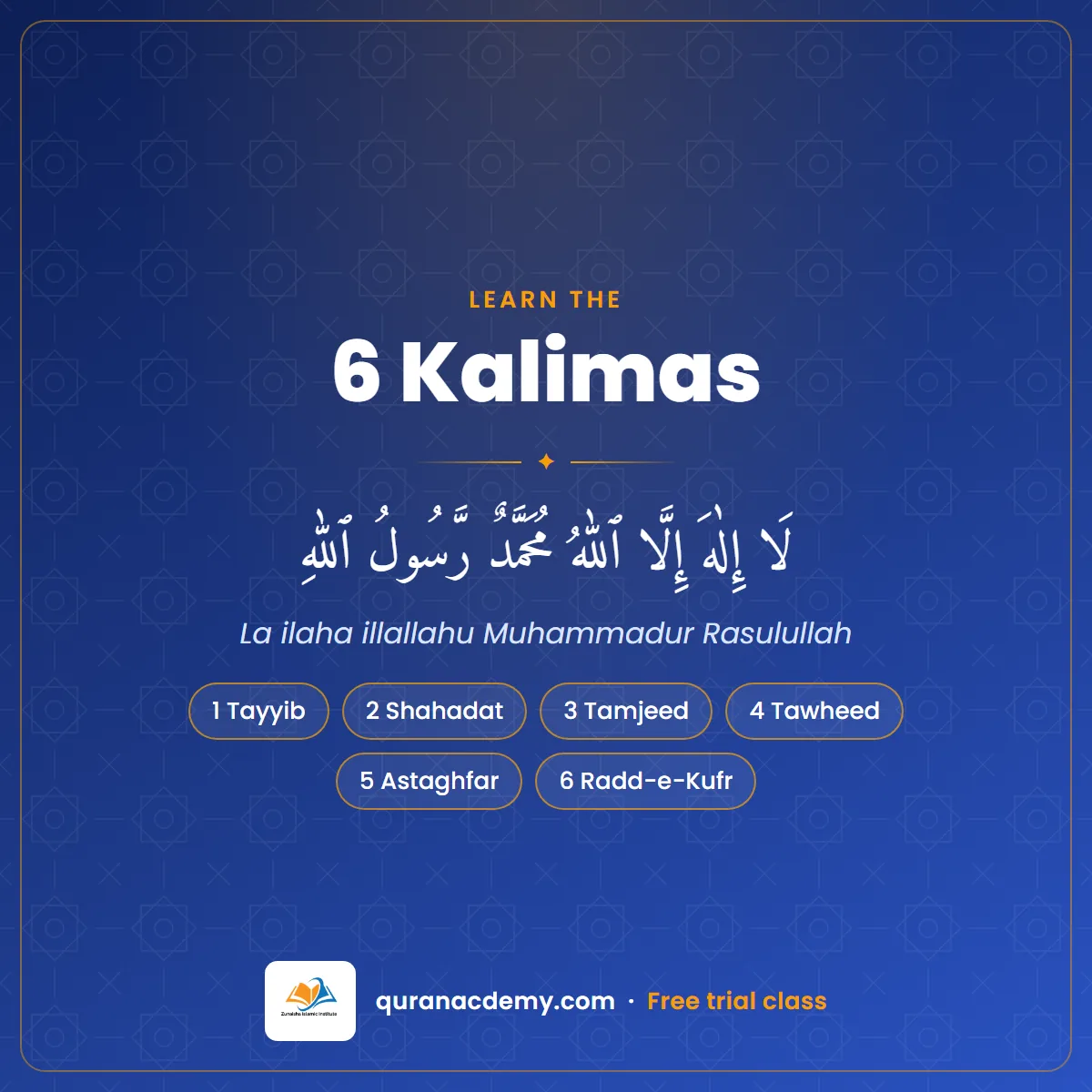
Our teachers include a daily dua in many children's lessons, and our Islamic Studies for kids course covers duas, manners and the basics of faith step by step. See also the 6 Kalimas and the 4 Qul.
Frequently asked questions
Which duas should kids learn first?
Start with Bismillah before eating, Alhamdulillah after eating, and the dua before sleeping. They are short and used every day, so children remember them quickly.
At what age can children learn daily duas?
Children as young as 2 or 3 can learn short ones like Bismillah and Alhamdulillah by hearing them. Longer duas usually come from about age 5.
Do kids need to learn the Arabic, or is English enough?
Teaching the Arabic words with their meaning is best, because these are the words the Prophet ﷺ used. The English meaning helps children understand what they are saying.
How many duas should a child learn at once?
One new dua a week is plenty. Make it a habit before adding the next one.
Last updated 29 October 2026. Spotted a mistake? Let us know.